Show Your Pride!
Find your state and Share the love!
-
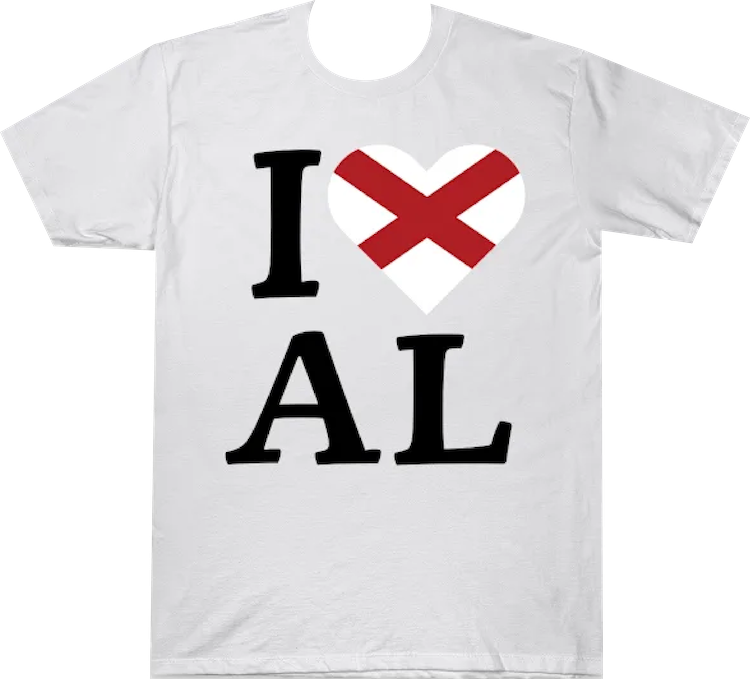
 AL
ALAlabama
The crimson cross of St. Andrew used on Alabama's flag is also know as a 'saltire' or the 'crux decussata'.
ALFlag Adoption: February 16, 1895Other Facts
There apparently had long been a debate over whether the flag was supposed to be square or rectangular. This was finally resolved in 1987 by then Attorney General Don Siegelman who decided that based on the most common usage, it would be officially rectangular going forward.
Flag Facts for Alabama
-

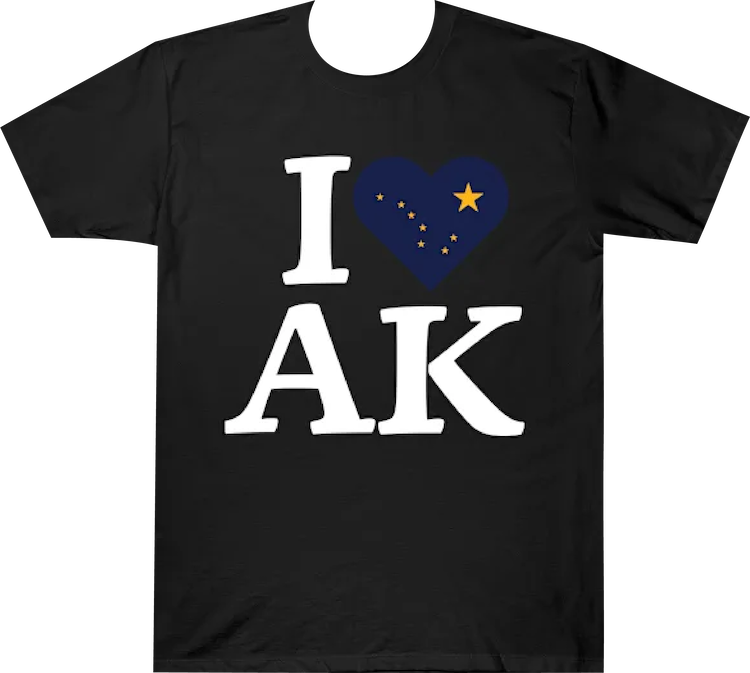 AK
AKAlaska
Seven gold stars form the Big Dipper and direct one's eye to the larger eighth star, Polaris, symbolizing the state's northern location.
AKFlag Adoption: May 2, 1927Symbols & Colors
- Blue: Sky & forget-me-not flower
- North Star: Future of the state
- Dipper: Great bear & strength
Other Facts
The contest for determining the flag's current design was won by a seventh-grader, Benny Benson, out of 142 submissions.
Flag Facts for Alaska
-

 AZ
AZArizona
The only flag that uses the color copper, the star signifies the state's standing as largest producer of copper in the union.
AZFlag Adoption: February 27, 1917Symbols & Colors
- Rays: Setting sun & the 13 colonies
- Red & Yellow: Spanish conquistadors
- Copper Star: Copper production
- Blue: Shared with the U.S. flag
Flag Facts for Arizona
-

 AR
ARArkansas
Two of the stars on the diamond (at the left and right points) represent Arkansas and Michigan, as both joined the U.S. about the same time.
ARFlag Adoption: February 28, 2011Symbols & Colors
- Diamond: First diamond producer
- 25 Stars: 25th State to join
- 3 Stars: Spain, France, and the U.S.
- 1 Star: Member of the Confederacy
Other Facts
Along with signifying that the area that is now Arkansas was once part of three countries, the three blues stars also represent 1803, the year of the Louisiana Purchase, as well as Arkansas being the third state formed from that purchase after Louisiana and Missouri.
Flag Facts for Arkansas
-

 CA
CACalifornia
The flag as designed by William L. Todd, cousin of Mary Todd Lincoln, First Lady of the United States and wife of President Abraham Lincoln.
CAFlag Adoption: February 3, 1911Symbols & Colors
- White: Purity
- Red: Courage
- Grizzly: Courage & strength
- Star: Independence
Other Facts
The bear's name is "Monarch" and is based on a real bear that was held in captivity at Woodward's Gardens and then the Golden Gate Zoo, both in San Francisco. The image of the bear wasn't standardized until 1953 and is based on an 1855 watercolor by Charles Christian Nahl.
Flag Facts for California
-

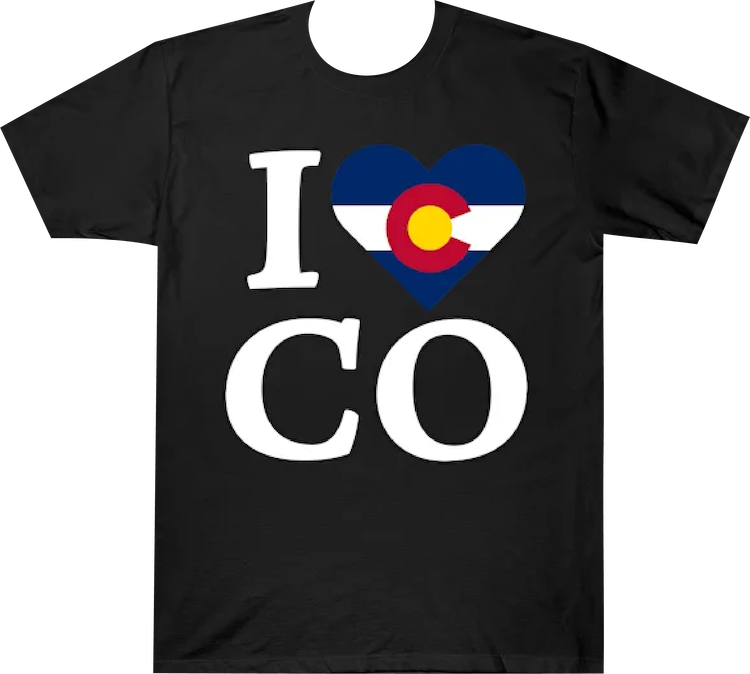 CO
COColorado
The "C" stands for: Colorado (meaning 'red' in Spanish), centennial (joining the union in 1876), and columbine (the state flower).
COFlag Adoption: March 31, 1964Symbols & Colors
- Gold: Abundant sunshine & gold
- White: Snow-capped mountains
- Blue: Clear, vast skies
- Red: Rich soil
Other Facts
The initial state flag was adopted in 1911, designed by Andrew Carlisle Johnson. However, the red and blue colors were not officially determined until 1929 and finally the size of the "C" was confirmed by the state General Assembly in 1964.
Flag Facts for Colorado
-
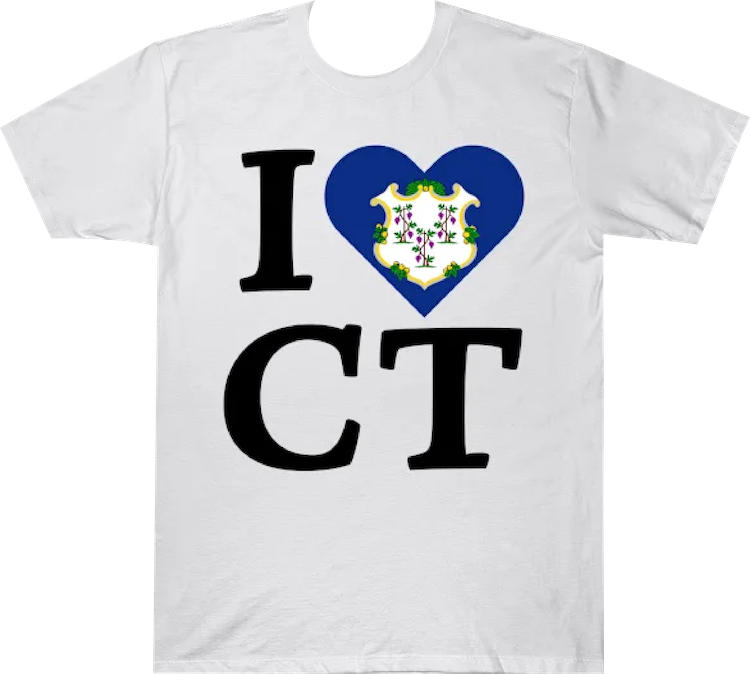
 CT
CTConnecticut
One of the oldest state flags, the seal was used on the flag of Connecticut troops during Revolutionary War.
CTFlag Adoption: September 9, 1897Motto
Qui Transtulit Sustine – He who transplanted still sustains
Symbols & Colors
- Grapevines: Peace & good luck
- Vines: Friendship
Other Facts
The three grapevines are thought to represent the three oldest settlements. Sources differ if they are meant to be the settlements of Windsor, Wethersfield, and Hartford or the three colonial foundings of Saybrook, New Haven, and Connecticut.
Flag Facts for Connecticut
-

 DE
DEDelaware
The date of "December 7, 1787" is when the state joined the union, in fact the first state to do so.
DEFlag Adoption: July 24, 1913Symbols & Colors
- Ship: Commerce
- Wheat, Ox, & Farmer: Agriculture
- Solider: Revolutionary War
- Diamond: The Diamond State
Other Facts
According to legend, Thomas Jefferson allegedly called Delaware a "jewel among the states" because of its strategic location. This eventually turned into the state's nickname: "The Diamond State," but according to Monticello.org, this phrase has never been found in his writings.
Flag Facts for Delaware
-

 DC
DCDistrict of Columbia
The DC flag is based on the coat of arms of George Washington's family, the symbology which goes back as far as twelfth century England.
DCFlag Adoption: October 15, 1938Symbols & Colors
- 3 Stars: 3 commissioners
- 2 Stripes: Senate & House of Reps.
- White: Innocence of the people
Other Facts
In vexillology and heraldry, stars such as those seen on this flag ar called "mullets;" any form of a star with straight-edged radiating points. The three stars on this flag may represent three early commissioners who ran the district.
Flag Facts for District of Columbia
-
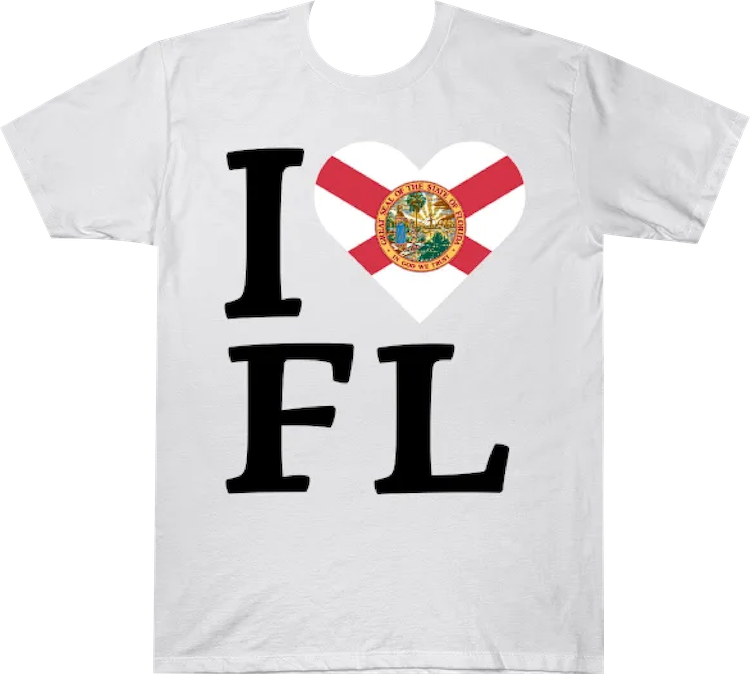
 FL
FLFlorida
Early versions of the flag displayed only the central seal; the red saltire was added in 1890 to distinguish it from a white flag of surrender when it was at rest.
FLFlag Adoption: May 21, 1985Symbols & Colors
- Woman: Seminole tribe
- Sable Palm: State tree
- Flowers: Abundance of flowers
- Sun: Land of sunshine
- Water: Meeting of lakes & rivers
- Steamboat: Industry & trade
Flag Facts for Florida
-

 GA
GAGeorgia
The 13 stars on the blue canton signify the state's role as one of the original 13 colonies.
GAFlag Adoption: February 19, 2003Motto
Wisdom, Justice, Moderation
Symbols & Colors
- 13 stars: One of the original colonies
- Arch: State constitution
- Sword: Defense of the constitution
- Pillars: 3 gov't branches
Flag Facts for Georgia
-

 HI
HIHawaii
This is the only U.S. state flag to feature the national flag of a foreign country, in this case, the United Kingdom.
HIFlag Adoption: December 29, 1845Symbols & Colors
- Stripes: Eight major islands
- Union Jack: British protectorate
Other Facts
It's speculated that the red, white, and blue colors of the flag were influenced not only by the U.S. and Britain, but by Hawaii's historical interactions with Russia and France.
Flag Facts for Hawaii
-

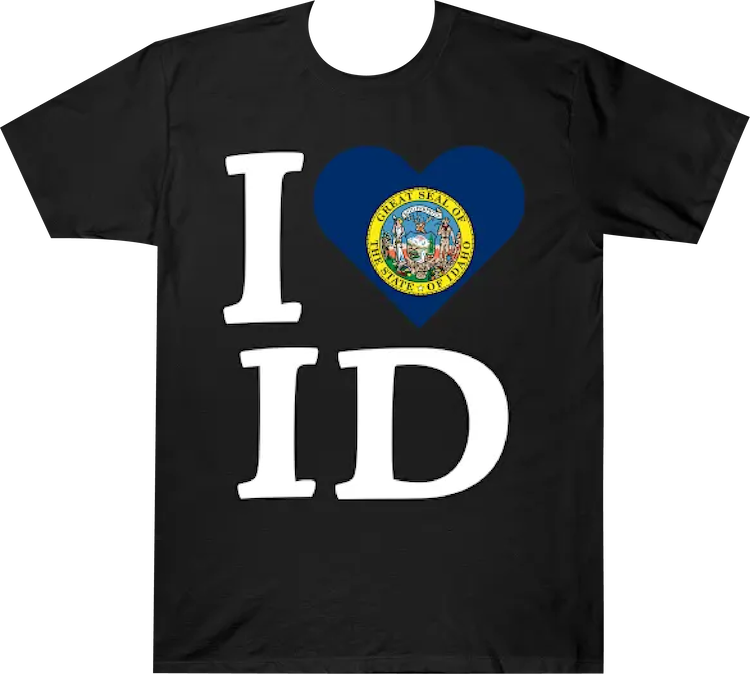 ID
IDIdaho
The first version of state seal adorning the flag was designed by Emma Edwards Green, the only woman to design a U.S. state seal, and was used until 1957.
IDFlag Adoption: March 12, 1907Motto
Esto perpetua – It is forever
Symbols & Colors
- Woman: Justice
- Man: Mining
- Pine tree: Timber
- Plowman: Agricultural
- Cornucopias: Horticultural
- Elk: Game protection
- Wild Syringa: State Flower
Flag Facts for Idaho
-
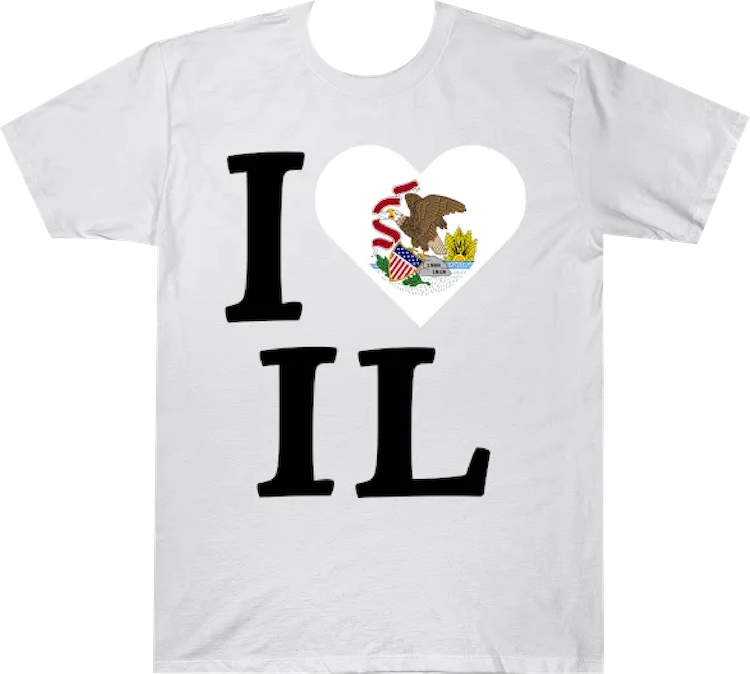
 IL
ILIllinois
The two dates of 1818 & 1868 signify the year that Illinois attained statehood and of the seal's redesign by the then Secretary of State Sharon Tyndale, respectively.
ILFlag Adoption: September 17, 1969Motto
State Sovereignty, National Union
Symbols & Colors
- Eagle: United States
- Shield: Original 13 states
- Grass: Expansive prairies
Other Facts
Post Civil War, Secretary Tyndale also wanted to reverse the motto to be "Nation Union, State Sovereignty," but the legislature refused to accept the change. Still the flag's designer, he reflected his preference by positioning the first half of the motto lower and flipping "Sovereignty" upside-down.
Flag Facts for Illinois
-

 IN
INIndiana
The Illinois flag was adopted in 1917 to celebrate the states centennial the year before.
INFlag Adoption: May 31, 1917Symbols & Colors
- Torch: Liberty & enlightenment
- Rays: Far-reaching influence
- 13 stars: Original 13 states
- 5 stars: Next 5 states
- Large star: 19th state
Other Facts
The collection of stars collectively count out Indiana's position as the 19th state to join the union. 13 for the original colonies and then 5 more for Vermont, Kentucky, Tennessee, Ohio, and Louisiana.
Flag Facts for Indiana
-

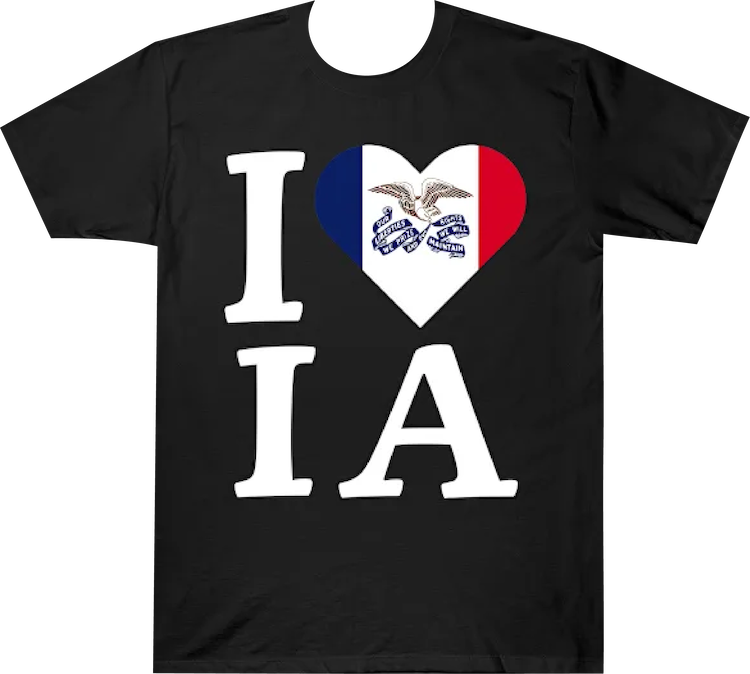 IA
IAIowa
Iowa joined the union in 1846, but didn't have a banner or flag to represent itself for 75 years.
IAFlag Adoption: March 29, 1921Motto
Our liberties we prize and our rights we will maintain
Symbols & Colors
- Blue: Loyalty, justice, truth
- White: Purity
- Red: Courage
Other Facts
The flag was designed by Dixie Cornell Gebhardt. She was lauded by then Governor William Lloyd Harding as "Iowa's Betsy Ross."
Flag Facts for Iowa
-

 KS
KSKansas
Kansas took a while to adopt a flag, being the 48th state to do so in 1927. It was later modified in 1961 to add the word "Kansas."
KSFlag Adoption: September 24, 1961Motto
Ad Astra per Aspera – To the Stars through Difficulties
Symbols & Colors
- Steamboat: Commerce
- Rising Sun: The East
- Sunflower: State flower
- Wagon train: American expansion
- Farmer & Cabin: Future prosperity
Flag Facts for Kansas
-

 KY
KYKentucky
Popular belief says the two men are Daniel Boone and Henry Clay, a respected statesman. Officially, the Kansas Secretary of State office say the two men are wholly symbolic.
KYFlag Adoption: June 14, 1962Motto
United We Stand, Divided We Fall
Symbols & Colors
- Goldenrod: State flower
- Navy Blue: Strength
Other Facts
The flag was formally adopted in March 1918 and was standardized in June 1962.
Flag Facts for Kentucky
-

 LA
LALouisiana
Medieval lore states that pelican mothers were so attentive to their young they would draw their own blood to feed to their chicks if no food was available.
LAFlag Adoption: November 22, 2010Motto
Union, Justice, Confidence
Symbols & Colors
- Pelican: Dedication & sacrifice
Other Facts
An eighth-grader noticed that in older versions of the flag, the drops of blood were not always present, which was against tradition and so brought it to the attention of his state legislator. The three drops were formally added in 2006 by an act of the state legislature.
Flag Facts for Louisiana
-

 ME
MEMaine
The Eastern white pine is the state tree and signifies the importance that the wood of the tree had to Maine's early ship building industry.
MEFlag Adoption: February 23, 1909Motto
Dirigo – I direct
Symbols & Colors
- Pine tree: Ship building industry
- Sailor: Reliance on the sea
- Farmer: Agriculture
- Moose: State animal
- North Star: Northern-most state
Other Facts
Maine does not define the official colors of the flag, so it is possible to find flags of different colorations.
Flag Facts for Maine
-

 MD
MDMaryland
The two pairs of colors are the paternal and maternal coat of arms of Cecil Calvert, 2nd Baron Baltimore, the first proprietor of Maryland.
MDFlag Adoption: March 9, 1904Symbols & Colors
- Yellow & black: Calvert (paternal)
- Red & White: Crossland (maternal)
Other Facts
The flag symbolizes the reconciliation of the the state's citizens after the Civil War; those who supported the Union forces had adopted the yellow and black and those who supported the Confederacy had adopted the red and white. The flag represents their reunion and commitment to each other.
Flag Facts for Maryland
-

 MA
MAMassachusetts
The sword is modeled after that of Myles Standish, the lifelong military commander for the Plymouth Colony.
MAFlag Adoption: July 3, 1971Motto
Ense Petit Placidam Sub Libertate Quietem – By the Sword We Seek Peace, but Peace Only Under Liberty
Symbols & Colors
- White star: Part the original colonies
- Down pointing arrow: Peace
- Arm and sword: For "By the sword"
Other Facts
Thomas Little Shell, chief of a band of the Ojibwa tribe, was used as the face of the Native American man.
Flag Facts for Massachusetts
-

 MI
MIMichigan
Since Michigan is a border state, the man with his hand up but a rifle in his hand signifies a desire and appreciation for peace, but also the willingness to defend one's state and country.
MIFlag Adoption: August 1, 1911Motto
Si Quaeris Peninsulam Amoenam, Circumspice – "If you seek a pleasant peninsula, look about you."
Symbols & Colors
- Tuebor: I will defend (Latin)
- Man: Peace and defense
- Eagle: The U.S.
- Elk & Moose: Michigan
Other Facts
The seal also contains the national motto: E Pluribus Unum – From many, one.
Flag Facts for Michigan
-

 MN
MNMinnesota
The commission to re-imagine the state's flag received a staggering 2,128 design submissions from Minnesotans.
MNFlag Adoption: May 11, 2024Symbols & Colors
- Dark blue: Outline of the state
- Bright blue: 10,000 lakes
- Star: L’étoile du Nord (North Star)
Other Facts
This is the newest flag design to be adopted by a state and is a distinct change from Minnesota's previous flag. The 8-point star gives the illusion of four letter M's and can also be found on the floor of the rotunda of the Minnesota State capitol building.
Flag Facts for Minnesota
-
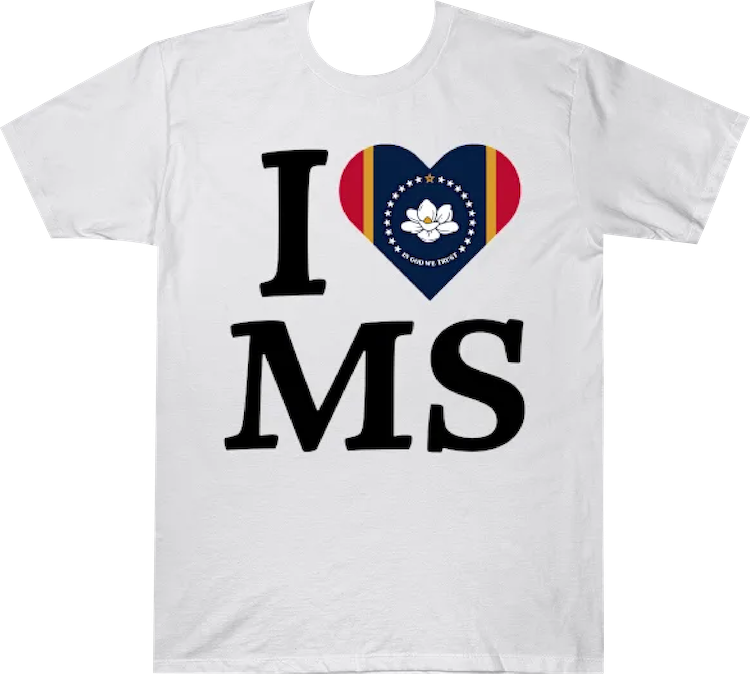
 MS
MSMississippi
Called "The New Magnolia", the Mississippi state flag was adopted in 2021 and designed to represent a sense of hope and rebirth.
MSFlag Adoption: January 11, 2021Symbols & Colors
- Gold star: The indigenous peoples
- Magnolia: Hospitality
- Blue: Justice & perseverance
- Red: Hardiness & valor
- Gold: Rich cultural history
Other Facts
Lead designer Rocky Vaughan was also supported by other designers in a collaborative effort: Sue Anna Joe, Kara Giles, Dominique Pugh, and Micah Whitson.
Flag Facts for Mississippi
-

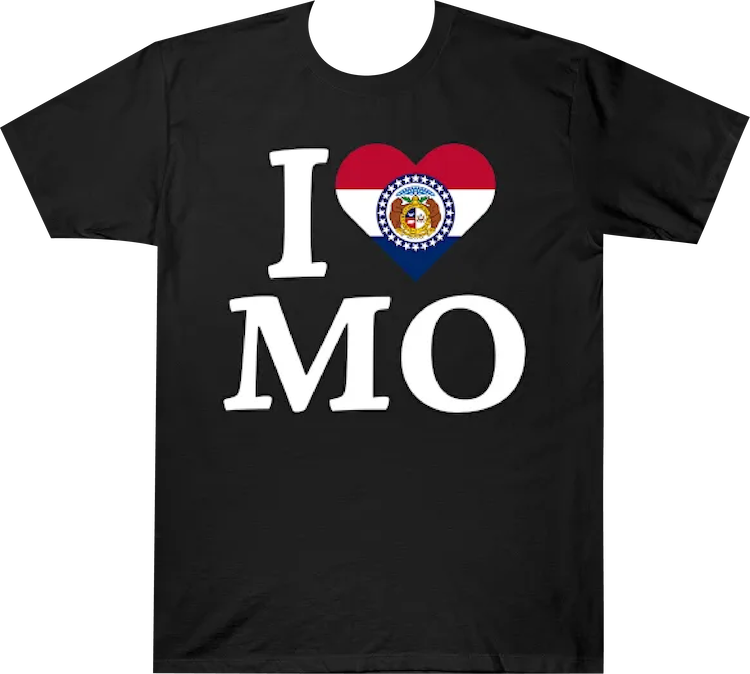 MO
MOMissouri
It took almost 100 years after the inception of the state for it to finally and formally adopt a flag.
MOFlag Adoption: March 22, 1913Motto
Salus Populi Suprema Lex Esto – Let the good of the people be the supreme law
Symbols & Colors
- Red, White, & Blue: The U.S. flag
- 24 stars: 24th state in the union
- Crescent: Increasing people & wealth
- Bears: Bravery & strength
- Knight helmet: State sovereignty
Flag Facts for Missouri
-

 MT
MTMontana
The seal is very close to the original seal of the territory of the Montana, but with buffalo where there are trees now.
MTFlag Adoption: July 1, 1981Motto
Oro y Plata – Gold and Silver
Symbols & Colors
- Plow: Agriculture
- Shovel & pick: Mineral wealth
Other Facts
When Montana became a state in 1889, there was discussion to add more to the seal, but it was decided to leave the seal as it was for concern of it becoming overpopulated.
Flag Facts for Montana
-

 NE
NENebraska
Nebraska was the last of the contiguous states to adopt its own flag. Before then, it used banners with some variant of the seal on it to represent the state.
NEFlag Adoption: July 16, 1963Motto
Equality Before the Law
Symbols & Colors
- Steamboat: Commerce
- Blacksmith: Mechanical arts
- Cabin, wheat, corn: Agriculture
- Train: Westward expansion
Flag Facts for Nebraska
-

 NV
NVNevada
The 1905 version of the flag had gold and silver stars and the literal words "Nevada," "gold," and "silver" on it. A later proposed version was even more complex, with an added shield.
NVFlag Adoption: July 25, 1991Motto
Battle Born
Symbols & Colors
- Silver star: State nickname
- Sagebrush: State flower
Other Facts
The more complex flag proposal was rejected, and a 1926 proposal offered a simplified flag, where the sagebrush wreath and the motto "Battle born" was added, reflecting the state's entry into the union during the Civil War. This became the state flag from 1929 to 1991.
Flag Facts for Nevada
-
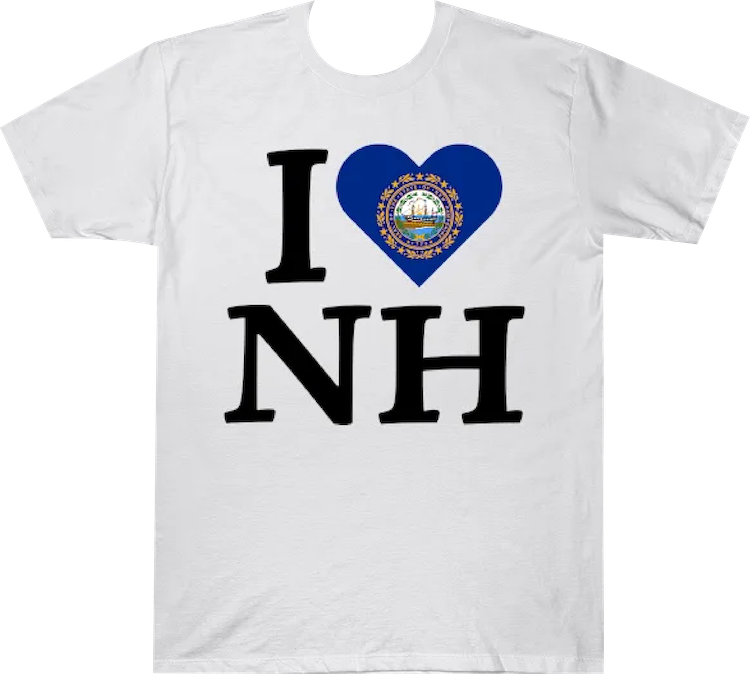
 NH
NHNew Hampshire
The frigate on the seal is the USS Raleigh, one of the first 13 warships authorized by the Continental Congress to form the Continental Navy in 1775.
NHFlag Adoption: January 1, 1932Symbols & Colors
- Frigate: The Navy & shipbuilding
- Boulder: Rugged terrain & people
- Laurel wreath: Honor & victory
- 9 stars: 9th state
- Water: Harbor of Portsmouth
Other Facts
This state flag is the only one that depicts a flag of the United States.
Flag Facts for New Hampshire
-

 NJ
NJNew Jersey
The buff and blue colors were chosen by General George Washington for New Jersey's army regiments during the Revolutionary War in 1779.
NJFlag Adoption: May 11, 1896Motto
Liberty and Prosperity
Symbols & Colors
- Helmet & Horse: Independent state
- Lady Liberty & staff: Freedom
- Ceres & cornucopia: Abundance
- Plows on Shield: Agriculture
Other Facts
The cap on the staff that Lady Liberty holds is a stylized Phrygian cap, commonly warn in ancient Eastern Europe, Anatolia, and Asia and symbolizes freedom and liberty.
Flag Facts for New Jersey
-

 NM
NMNew Mexico
Four is a sacred number to the Zia people and the sun symbol represents the four points of a compass, the four seasons, four parts of a day, and the four stages of life.
NMFlag Adoption: March 15, 1925Symbols & Colors
- Sun icon: Zia tribe
- Red & yellow: Old Spain
Other Facts
The Zia also believe that humankind has four sacred obligations: developing a strong body, a clear mind, a pure spirit, and a devotion to the welfare of others.
Flag Facts for New Mexico
-

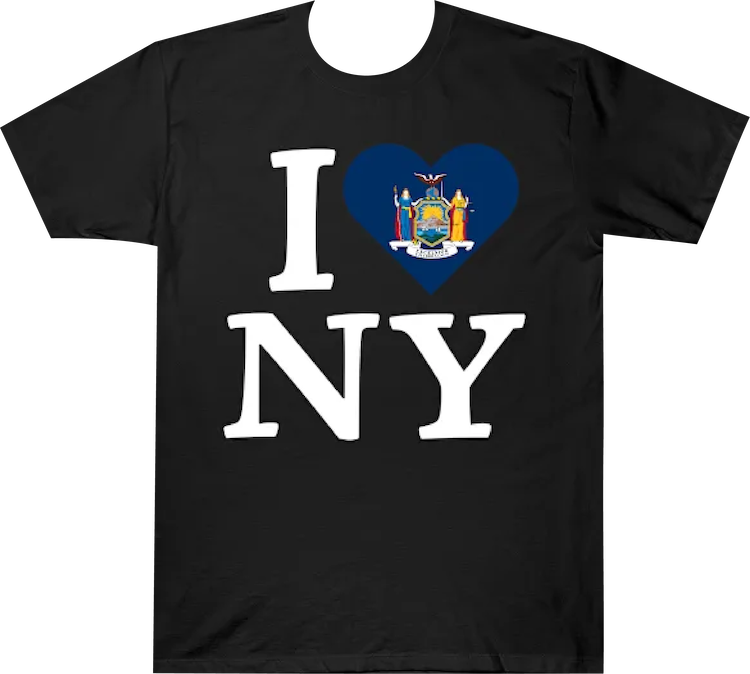 NY
NYNew York
The coat of arms for New York has been around since 1778. E Pluribus Unum was added in 2020 but flags without it will continue to be used as long as they are serviceable.
NYFlag Adoption: April 2, 2020Motto
Excelsior – Ever upward
Symbols & Colors
- Eagle: Western hemisphere
- Lady Liberty & staff: Freedom
- Lady Justice: Impartial justice
- Phrygian cap: Freedom & liberty
- Crown: Freedom from the monarchy
Other Facts
The Phrygian cap has roots in ancient Rome and Greece, and a version of it was used to denote a freed slave or possibly a foreigner.
Flag Facts for New York
-

 NC
NCNorth Carolina
The flag of North Caroline is sometimes referred to as the North Star. The flag preceding the current one flipped the red and blue colors and featured a larger prominent white star.
NCFlag Adoption: June 24, 1991Symbols & Colors
- Blue: Justice & perseverance
- Red: Hardiness & valor
- White: Purity & innocence
Other Facts
The May 1775 date refers to the Mecklenburg Declaration of Independence, when the residents of the county allegedly declared independence from Great Britain, preceding the Declaration of Independence. The April 1776 date is for the Halifax Resolves, the resolution that was the first official call to action for the colonies separate from Great Britain.
Flag Facts for North Carolina
-

 ND
NDNorth Dakota
National Guard Colonel John H. Fraine commanded the state troops who saw action in the Philippine–American War of 1889 and pushed for the banner they fought under to be the state's official flag in 1911.
NDFlag Adoption: March 11, 1911Motto
E Pluribus Unum – From many, one
Symbols & Colors
- Olive branch: Peace
- Stars & Stripe: The first colonies
- Fan shaped rays: Birth of the U.S.
Other Facts
A banner with the national coat of arms was carried by all infantry regiments in the late 1800s to early 1900s, which is why the North Dakota flag so closely matches the federal icon.
Flag Facts for North Dakota
-

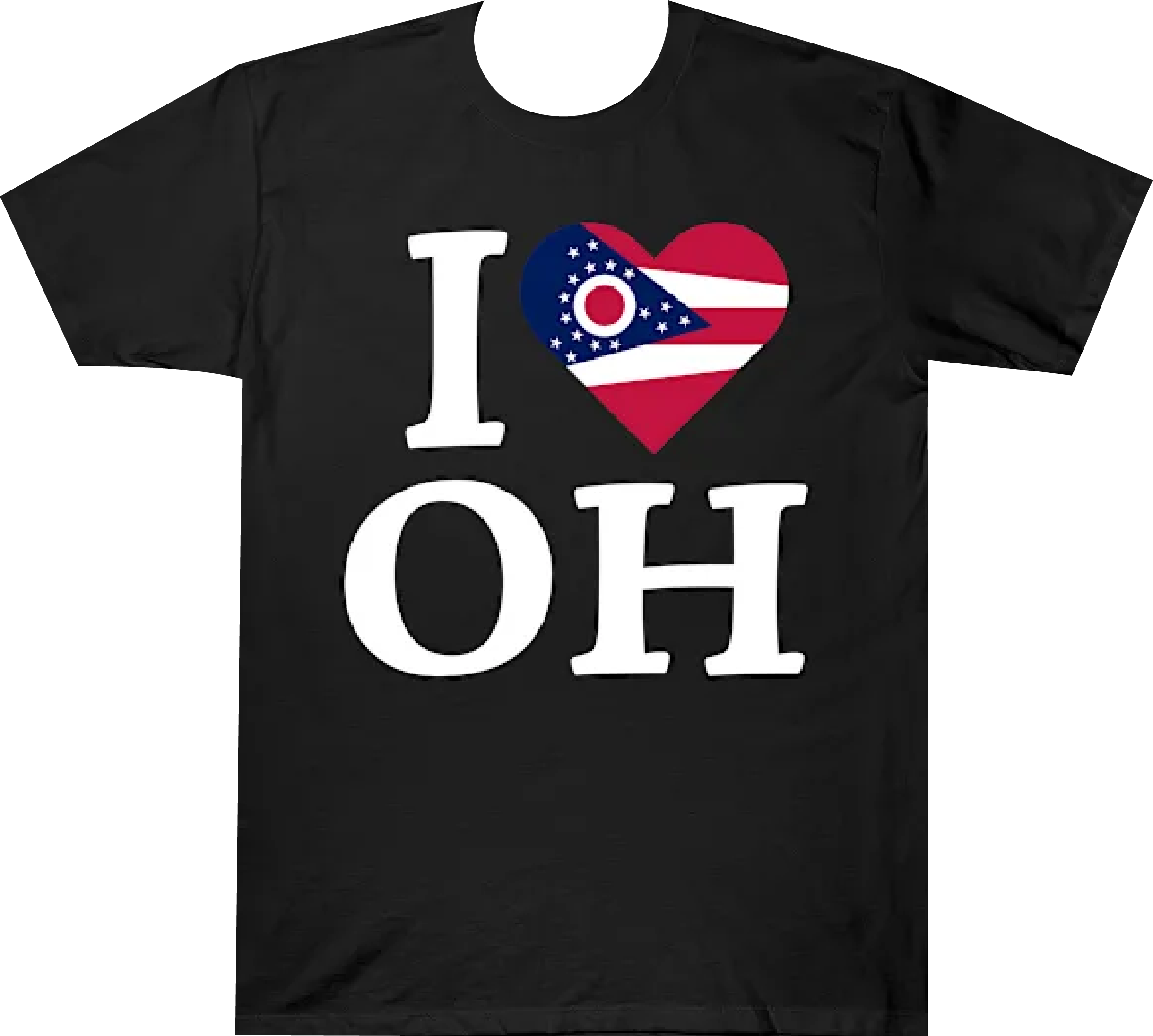 OH
OHOhio
Uniquely non-rectangular, the shape of Ohio's flag is called a swallow-tailed burgee, commonly used by ships for signaling and identification.
OHFlag Adoption: May 9, 1902Symbols & Colors
- Triangles: Hills & valleys
- Stripes: Road & waterways
- 17 stars: 17th state
- "O": Ohio & buckeye
Other Facts
Architect and designer John Eisenmann of the Ohio State Pan-American Exposition Commission came up with the design. The "O" represents not just the name Ohio, but also the distinctive nut of the buckeye tree, common in the state.
Flag Facts for Ohio
-
 OK
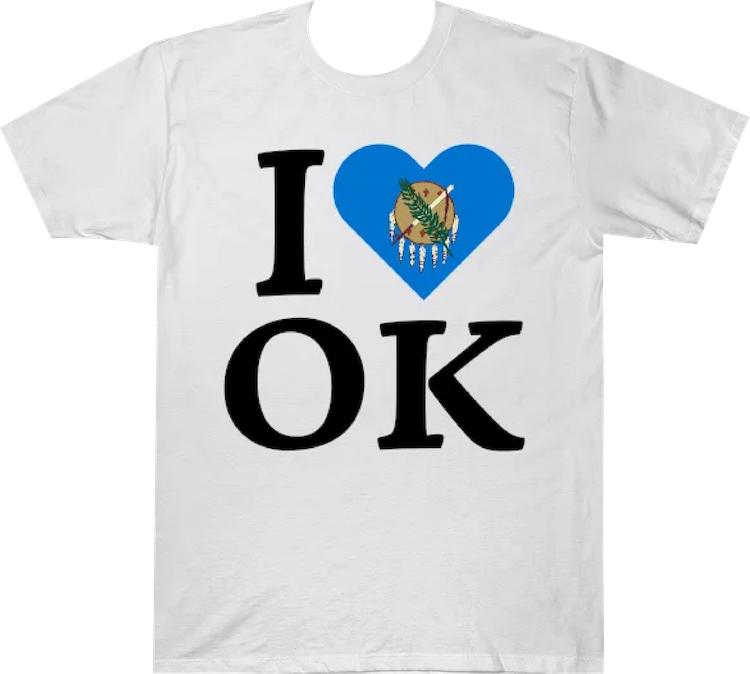
OKOklahoma
The first Oklahoma flag of 1911 was a red background with a single star. It was initially replaced in 1925 to better represent the diversity of cultures in Oklahoma and updated over time.
OKFlag Adoption: November 1, 2006Symbols & Colors
- Blue: Loyalty & devotion
- Osage Shield: Defense of the state
- Cross/Stars: High ideals
- Calumet & olive branch: Peace
Other Facts
The calumet is a ceremonial pipe, sacred to many Native America tribes.
Flag Facts for Oklahoma
-
 OR
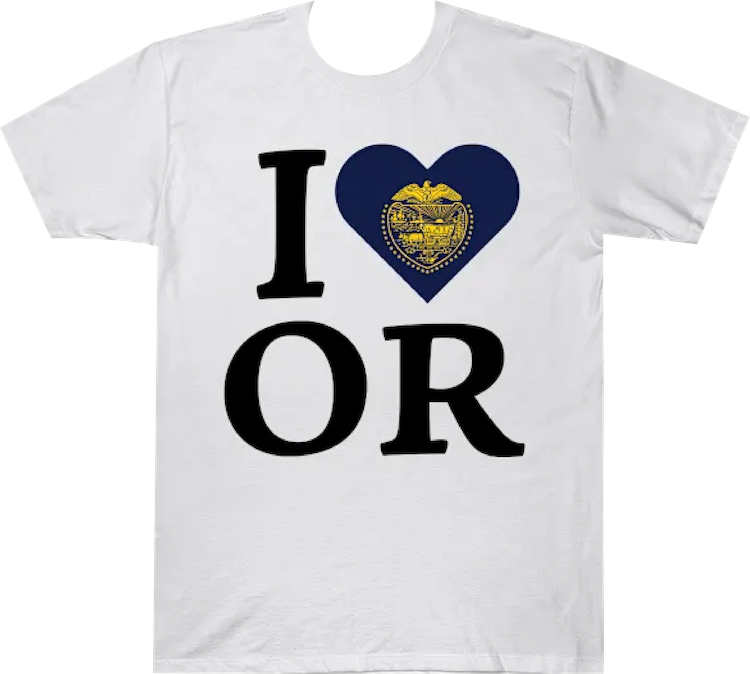
OROregon
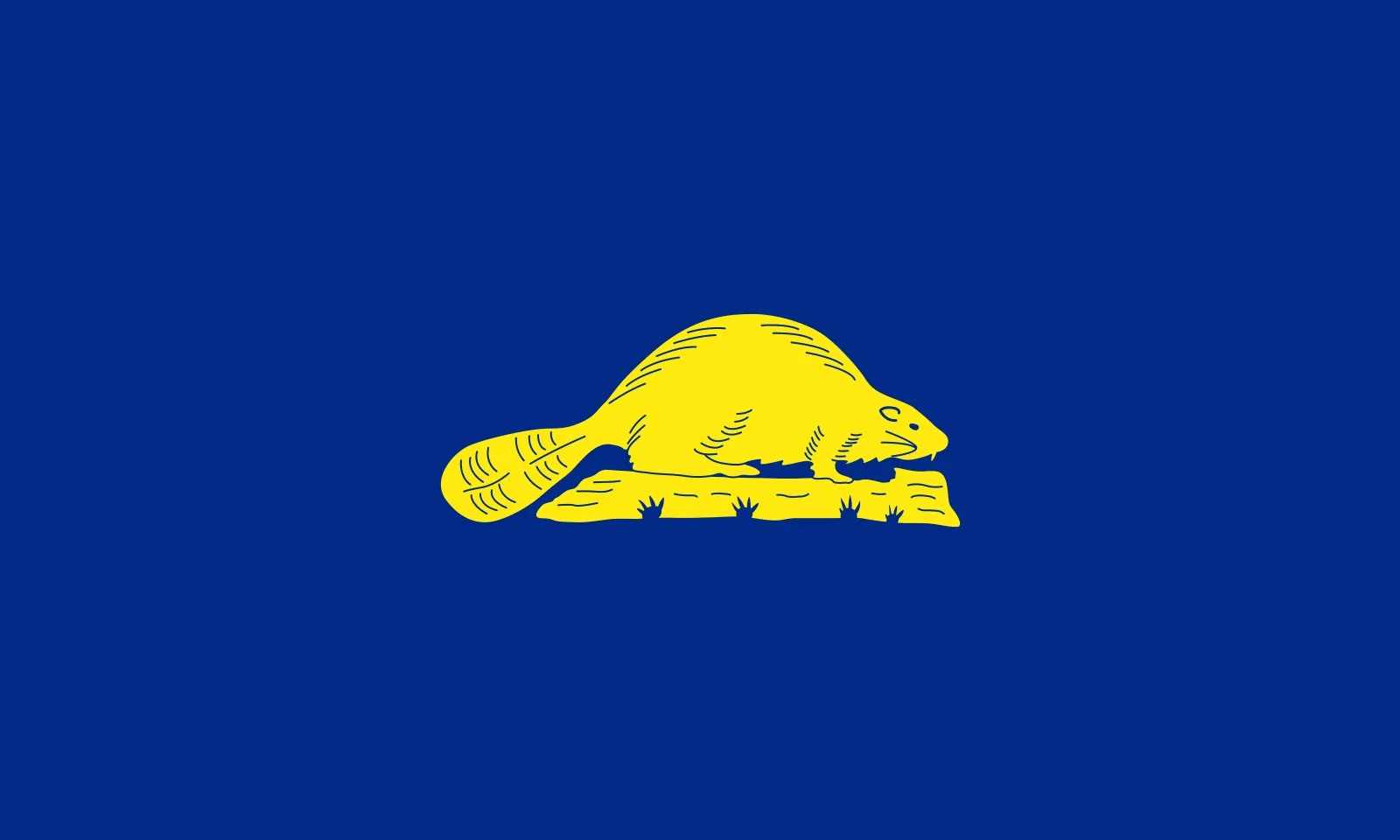
Oregon is the only state to have a different image on the reverse side of its flag, a golden colored beaver.
ORFlag Adoption: April 15, 1925Symbols & Colors
- 1859: Year of statehood
- 35 stars: 35 state
Other Facts
The Portland based department store Meier & Frank made the first flag, sewn by Blanche Cox and Marjorie Kennedy.
Flag Facts for Oregon
-

 PA
PAPennsylvania
Benjamin Franklin may have lent a hand in the the final Pennsylvania flag, having designed a number of military flags used by state military companies during the American Revolution.
PAFlag Adoption: June 13, 1907Motto
Virtue, Liberty and Independence
Symbols & Colors
- Ship: Commerce
- Plow: Natural resources
- Wheat: Wealth of thoughts & actions
- Olive branch: Peace
- Corn stalk: Prosperity
- Eagle: Loyalty to the U.S.
- Horses: Support
Flag Facts for Pennsylvania
-
 PR
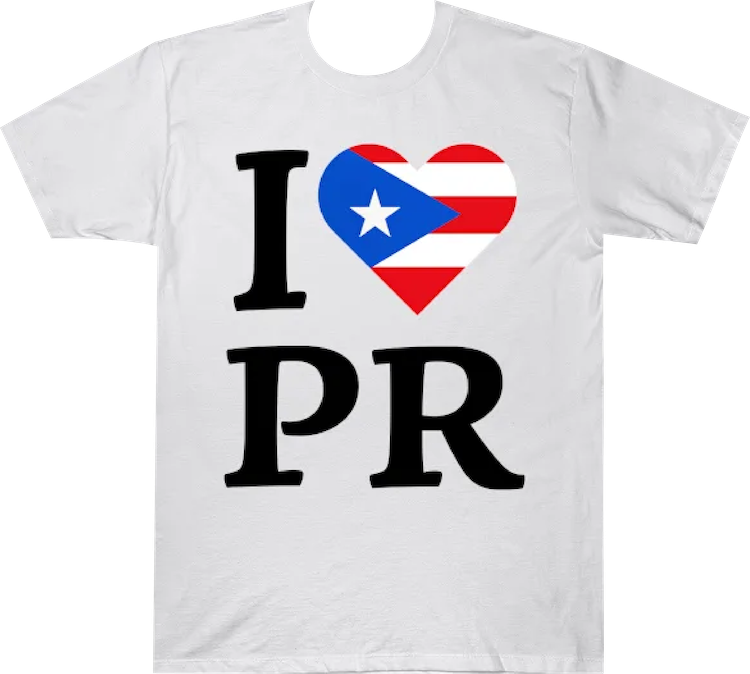
PRPuerto Rico
Despite the common colors with the U.S. flag, the flag of Puerto Rico is more closely related to that of Cuba: it is the same flag with the blue and red colors reversed.
PRFlag Adoption: July 22, 1952Symbols & Colors
- White Star: Commonwealth
- Blue Triangle: Sky & ocean
- Red stripes: Blood
- White stripes: Liberty & rights of man
Other Facts
The three sides of the blue triangle also represent the three parts of Puerto Rico's republican form of government. The shade of the blue may vary, as there is no official shade of blue defined for it.
Flag Facts for Puerto Rico
-

 RI
RIRhode Island
The anchor symbol was adopted and approved by the colonial legislature Rhode Island colonial seal in 1647.
RIFlag Adoption: November 1, 1897Motto
Hope
Symbols & Colors
- Gold Anchor: Hope & Stability
- 13 stars: 13th state
Other Facts
The first non-military version of the flag was approved in 1877, then simplified in 1882 to add the ring of stars that signify the state's ranking as the thirteenth to join the union.
Flag Facts for Rhode Island
-
 SC
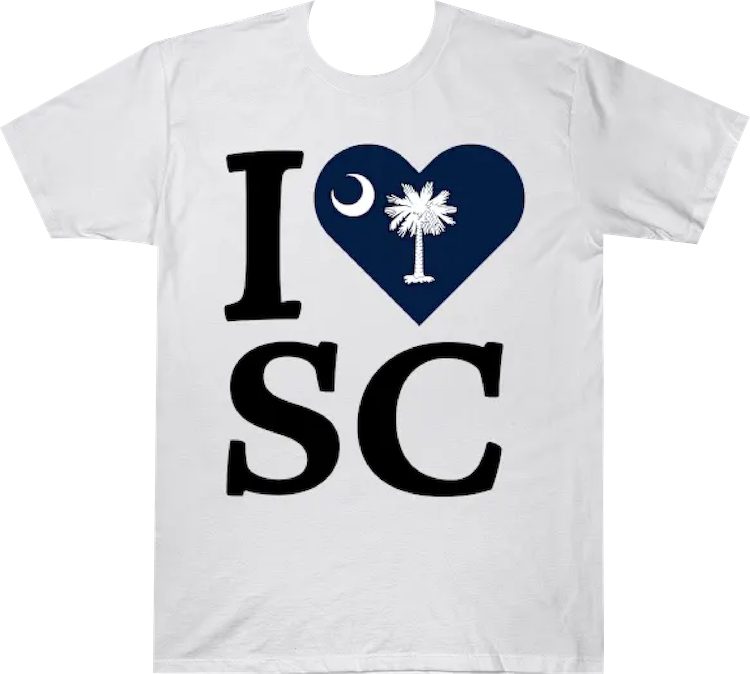
SCSouth Carolina
Logs made from the palmetto tree were apparently able to withstand bombardments from cannons of the British fleet and were used to construct a fortress on Sullivan's Island.
SCFlag Adoption: January 26, 1861Symbols & Colors
- Palmetto: State tree
Other Facts
Colonel William Moultrie provided the palmetto and crescent design, the tree symbolizing the defense of a palmetto-log fort on Sullivan's Island against the British fleet in 1776 and the crescent worn on the caps of his troops. The blue matches the color of the uniforms of the troops.
Flag Facts for South Carolina
-
 SD
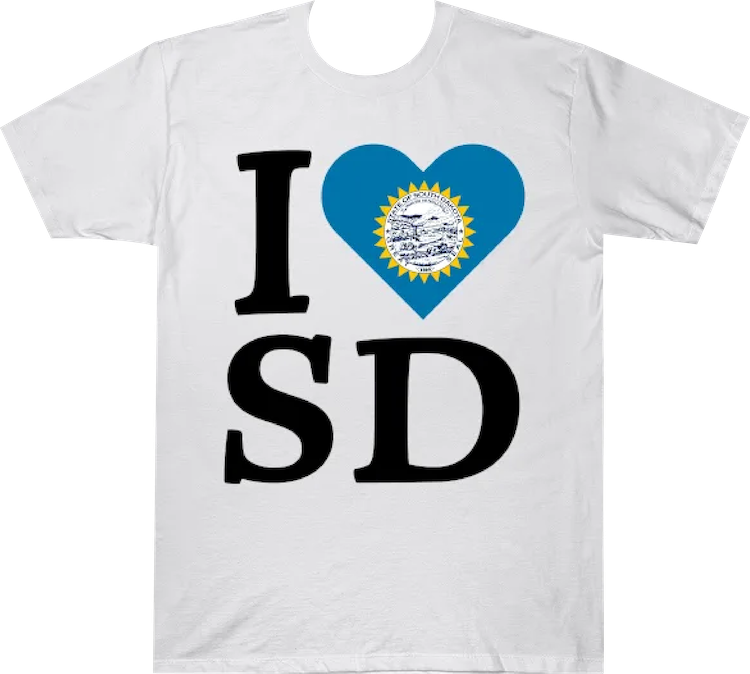
SDSouth Dakota
The original state flag used to have two different side (with the sun on one side and the state seal on the other) but in order to save costs, the flag was made one sided in 1963.
SDFlag Adoption: November 9, 1992Motto
Under God the People Rule
Symbols & Colors
- Sun motif: State weather
- Riverboat: Commerce
- Farmer: Agriculture
- Mine: Industry
- Hills & Cattle: Natural resources
Flag Facts for South Dakota
-

 TN
TNTennessee
The blue bar on the right side is so that the flag remains recognizable even when the wind is not blowing and the white edging helps the various features stand out.
TNFlag Adoption: April 17, 1905Symbols & Colors
- 3 Stars: The 3 divisions of the state
- Circle: The indissoluble trinity
Other Facts
The concept of the "indissoluble trinity" comes from the flags designer, LeRoy Reeves, a member the Tennessee Infantry Third Regiment. They represent the legally distinct Grand Divisions of Tennessee: East, Middle, and West.
Flag Facts for Tennessee
-

 TX
TXTexas
The Texas state flag is well-known as the "Lone Star Flag", referring to the time when Texas was a province of Mexico and had fought from 1835 to 1836 to gain its independence.
TXFlag Adoption: January 25, 1839Symbols & Colors
- Red: Bravery
- Blue: Loyalty
- White: Purity
Other Facts
The actual designer of the Lone Star Flag is unknown, but may have been one Senator William H. Wharton with the flag's design in a bill that he introduced in 1838.
Flag Facts for Texas
-

 UT
UTUtah
The Utah state flag is known as the "Beehive Flag," and symbolizes the industrious of the state's citizens, working hard not just for themselves, but rather for everyone.
UTFlag Adoption: March 9, 2024Symbols & Colors
- Blue: Wide-open skies & lakes
- White: Snow-capped mountains
- Red: Perseverance & rocky canyons
- Gold hexagon: Prosperity & strength
- Beehive: Community & industry
- Star: Hope & the 45th state
Other Facts
The former state flag will continue to be flown in the Utah State Capitol in an official capacity for ceremonies, special events, and legislative sessions.
Flag Facts for Utah
-
 VT
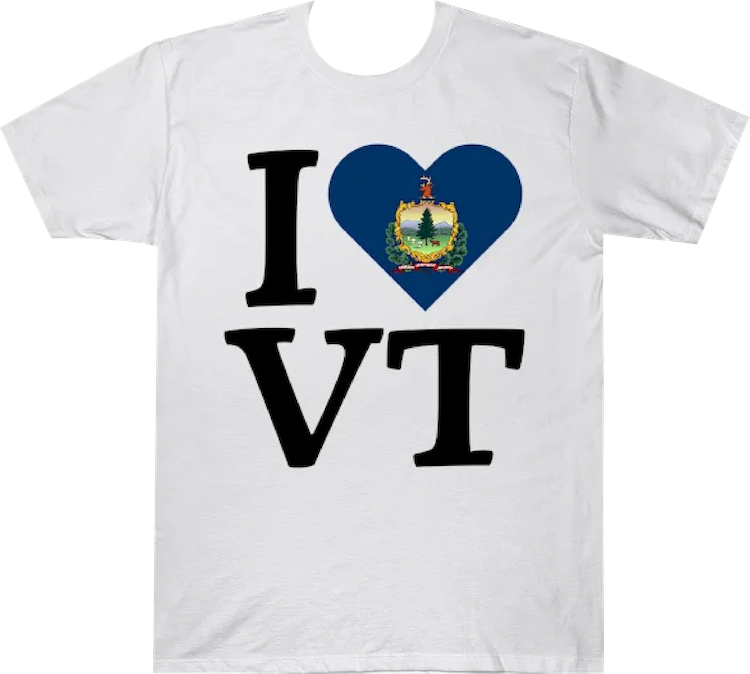
VTVermont
The motto of "Freedom and Unity" seeks to strike a balance between the freedom of the individual and the responsibility one holds for the collective community.
VTFlag Adoption: June 1, 1923Motto
Freedom and Unity
Symbols & Colors
- Cow: Dairy farming
- Grain sheaf: Agriculture
- Pine tree: Forests
- Deer head: Wildlife
Flag Facts for Vermont
-

 VA
VAVirginia
The woman symbolizes virtue and she stands over a vanquished king, who symbolizes tyranny.
VAFlag Adoption: February 1, 1950Motto
Sic semper tyrannis – Thus always to tyrants
Symbols & Colors
- Standing woman: Virtue
- Fallen man: Tyranny
Other Facts
The woman has an exposed breast, a classical depiction of an Amazon, and is the only state flag to show a form of toplessness.
Flag Facts for Virginia
-

 WA
WAWashington
Washington's state flag is the only state flag with a green background as well as the only one displaying an actual person as opposed to an allegorical figure.
WAFlag Adoption: April 1, 1967Other Facts
The first state seal used for the flag was designed by jeweler Charles Talcott of Olympia. Apparently he used an ink bottle and silver dollar to draw the rings and pasted a postage stamp of of George Washington in the center.
Flag Facts for Washington
-

 WV
WVWest Virginia
West Virginia's flag is the only one that shows crossed rifles, signifying the state's fight for liberty and unity.
WVFlag Adoption: March 7, 1929Motto
Montani Semper Liberi – Mountaineers are Always Free
Symbols & Colors
- Farmer with Axe: Farming
- Miner with Pick: Industry
- Cap & rifles: Freedom won by force
Other Facts
The large laurel wreath is that of Rhododendron maximum, as species of flower native to the Appalachians.
Flag Facts for West Virginia
-

 WI
WIWisconsin
The word "Forward" is the the state's motto an reflects the desire of the state to be national leader. It became the state's motto in 1851.
WIFlag Adoption: May 1, 1981Motto
Forward
Symbols & Colors
- Sailor: Labor on sea
- Yeoman: Labor on land
- Badger: State animal
- Plow: Agriculture
- Pick & shovel: Mining
- Arm & hammer: Labor
- Anchor: Navigation
- Cornucopia: Prosperity & abundance
- Pyramid of Lead: Mineral wealth
- 13 stars: Original 13 states
Flag Facts for Wisconsin
-

 WY
WYWyoming
The red border of the flag represents both the indigenous peoples of the area and the blood of the pioneers who settled there.
WYFlag Adoption: January 31, 1917Motto
Equal rights
Symbols & Colors
- Bison: Local fauna
- Red: Indians & pioneers
- White: Purity & uprightness
- Blue: Fidelity & justice
- Man: Livestock & mining
- 44: 44th state
Other Facts
The motto of Wyoming is a reminder that Wyoming was the first state to grant equal voting and office-holding rights to women in its constitution.
Flag Facts for Wyoming
-

 WY
WYWyoming
This is a custom version of the flag, where the seal has been removed for a more abstract representation.
WYFlag Adoption: January 31, 1917Flag Facts for Wyoming